How to Build a Backup Supplier Plan for Plate Sales
Build a backup supplier plan for plate sales with product specs, source checks, allergen review, yield tests, cost checks, and clean change records.
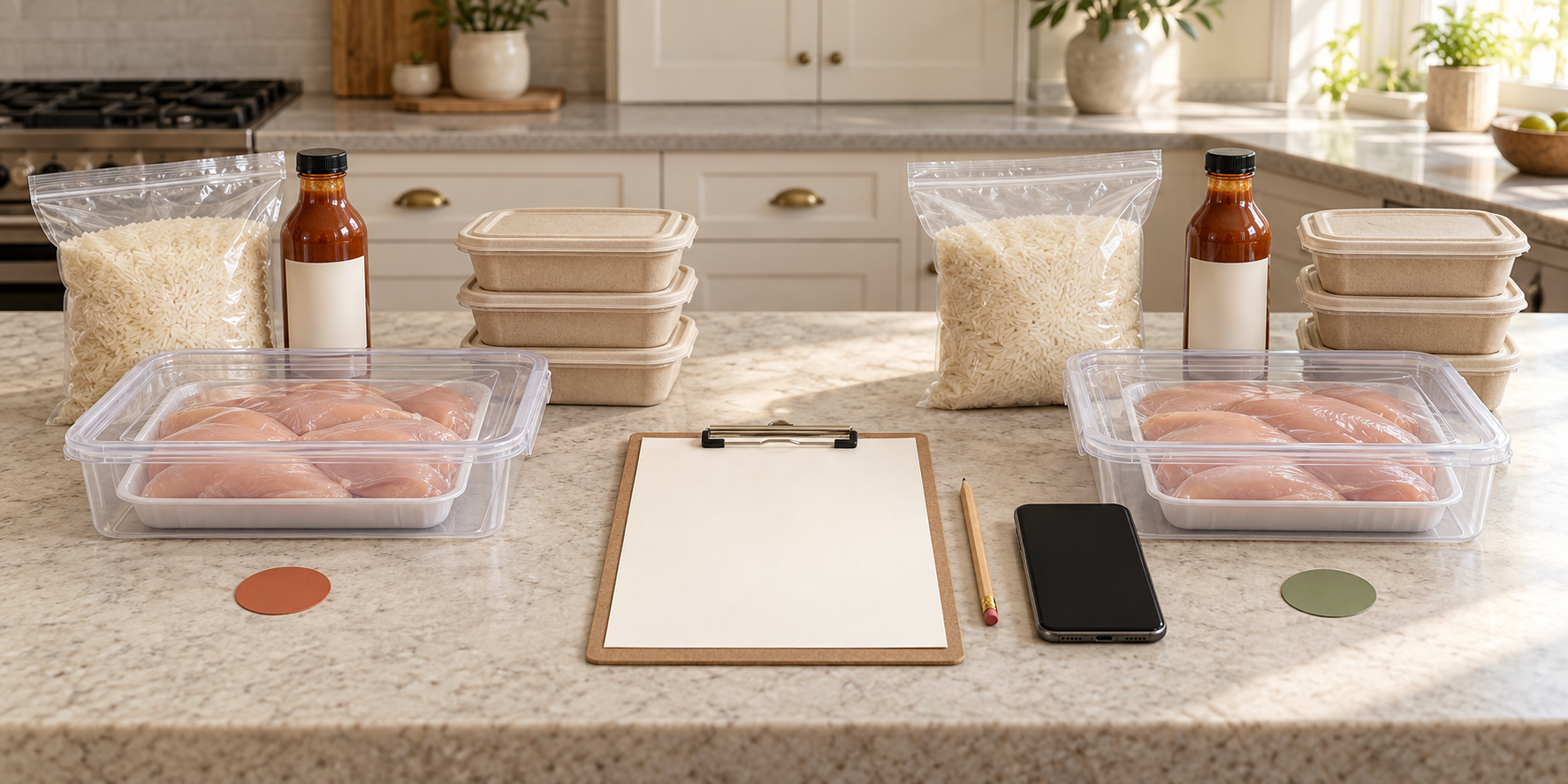
A sold-out ingredient can change more than the shopping trip. The replacement chicken may be injected with a solution, the new sauce may contain a different allergen, the rice may cook to a different yield, or the cheaper container may fail during pickup. If the first comparison happens while paid orders are waiting, the shortage controls the decision.
This guide will help you approve a backup supplier before that pressure arrives. You will identify the items that can stop a sale, write a useful purchase specification, verify the source and label, test usable yield, compare the real portion cost, and record exactly what changes when the backup is activated.
Food-business rules depend on the product, process, facility, and jurisdiction. The FDA Food Code is a model for adoption, not blanket permission to buy, prepare, or sell a particular food from home. Confirm current supplier, labeling, process, storage, and home-food requirements with the state or local authority that regulates your operation.
Rank the items that can stop the sale
Do not begin by finding a second source for every grocery. Start with the few items whose absence would force a menu change, reduce the number of sellable portions, or make the order unsafe or misleading.
For one menu, mark each item as one of three types:
- Stop item: no approved equivalent means the menu cannot be fulfilled as promised. The main protein, a required allergen-controlled ingredient, and the only container that safely fits the meal may belong here.
- Revision item: an alternative may work, but only after a recipe, yield, price, or menu record changes.
- Flexible item: the written specification already allows more than one tested product without changing the customer offer.
The Small Business Administration recommends identifying backup suppliers before a disruption. For a small plate seller, that means qualifying the stop items first. A list of store names is not yet a backup plan; it must point to an exact acceptable product.
Write one purchase specification for each critical item
A useful specification describes what the kitchen needs, not merely the name used on a shopping list. Write one line for the primary product and the conditions an alternative must satisfy.
Include:
- exact food or packaging type;
- raw, cooked, frozen, fresh, whole, trimmed, drained, or ready-to-use form;
- package size and count;
- required ingredient and allergen profile;
- acceptable added solutions, coatings, seasonings, or preparation state;
- storage and receiving condition;
- intended cooking or packaging use;
- tested usable yield; and
- the supplier item identifier or a clear package photograph for comparison.
For example, “rice” is too vague. “Long-grain parboiled rice, plain, 10-pound bag, no seasoning blend, tested in the current recipe at the recorded water ratio and batch size” tells a buyer what may change and what must not.
The 2026 FDA Food Code lists purchase specifications, monitoring, records, and quality control among the tools that can support preventive food-safety management. Your specification can be much shorter than a large operation’s document, but it should be specific enough that another person can buy the right item without guessing.
Approve the source before comparing the price
First confirm that the supplier and product fit the rules that apply to your operation. The model Food Code says food should come from sources that comply with law and that packaged food should carry the labeling required by law. Your adopted state or local rule may differ, and some home-food programs restrict the foods, sources, processes, or sales methods you may use.
Record the supplier’s business name, location or ordering route, contact details, exact item, and the date you checked it. If the source cannot provide the package, label, handling information, or other evidence your regulator requires, a low price does not make it an approved backup.
This step complements the delivery receiving check. Supplier approval decides whether you are willing to order the item. Receiving decides whether a specific delivery is acceptable when it arrives.
Compare the current labels line by line
Products with similar front names can have different ingredients. FDA explains that packaged-food ingredients are generally listed in descending order by weight, while current allergen guidance covers milk, egg, fish, Crustacean shellfish, specified tree nuts, wheat, peanuts, soybeans, and sesame.
Photograph or save the complete current label for both products. Compare:
- the exact product identity and net quantity;
- the full ingredient list, including sub-ingredients;
- the allergen declaration and any relevant handling statement;
- preparation, storage, and use directions;
- added solution, seasoning, coating, or concentration; and
- package date, lot, or item identifiers you need to retain.
FDA’s 2025 allergen guidance update changed some interpretations, which is a good reason not to rely on an old typed allergen sheet. If the replacement changes the recipe’s ingredient or allergen record, stop and update the customer-facing information and the kitchen record before accepting affected orders. The existing allergy-order workflow can help you decide whether a specific request can still be accepted safely.
Test usable yield and cooking behavior
The same purchase weight does not guarantee the same number of portions. Trim, bone, brine, coating, drained weight, grain variety, cut size, and moisture can all change what reaches the container.
USDA’s Food Buying Guide explains that yield varies with the quality, condition, purchase form, storage, handling, equipment, cooking method, and portioning. Its figures serve Child Nutrition Programs, so they are not a commercial requirement for your plate business. The useful principle is to compare the form you buy with the form your recipe uses, then measure your own result.
Run a small test before the backup enters a paid batch:
- record the unopened and usable quantity;
- prepare it with the current method and equipment;
- record the cooked or ready-to-pack yield;
- portion it with the normal tool;
- count complete sale portions; and
- note differences in cooking time, texture, sauce absorption, pan space, or holding quality.
If the result changes, revise and retest the standardized recipe rather than quietly forcing the new ingredient into the old instructions.
Compare cost per usable portion
A backup case that costs less can still cost more per plate. Compare the delivered cost after fees with the number of tested usable portions—not just the shelf price or case weight.
Use this simple comparison:
Delivered product cost ÷ tested usable portions = product cost per portion
Then add any change in packaging, prep time, waste, cooking energy, or required minimum purchase. Treat your test cost as evidence for this product, not a universal benchmark.
Suppose the primary 10-pound item costs $34 delivered and your tested batch produces 38 portions. Its ingredient cost is about $0.89 per portion. A $31 backup that produces only 32 portions costs about $0.97 per portion before extra labor or waste. Those are example figures, but they show why the cheaper package is not automatically the cheaper plate.
Feed the approved result into the food-quantity worksheet so a future shortage does not also create a purchasing shortfall.
Control the change when the backup is used
Give the alternative a status: approved as equivalent, approved with revision, or not approved. Record the test date, package identifier, supplier, yield, cost, and person who made the decision.
When you activate it, update every affected record once:
- recipe and batch sheet;
- ingredient and allergen information;
- menu description or choice;
- portion cost and price review;
- purchase quantity;
- supplier, receipt, and lot record; and
- production or packing note.
Keep the supplier package identifier connected to the batch so the change does not break your recall-readiness trace. Do not overwrite the primary product’s history. Start a dated version that shows which product was used for which sale.
Run a one-item supplier drill
The SBA’s continuity guidance recommends building relationships with alternative vendors, keeping contacts usable, and testing the continuity plan. Test one stop item before your next menu drop:
- pretend the primary item is unavailable;
- locate the exact approved backup and confirm stock;
- retrieve its current specification, label, and contact details;
- calculate the quantity and usable cost for the planned orders;
- identify every record that would change; and
- decide whether the evidence supports buying, revising the offer, or pausing sales.
Finish with one clear next action. Approve and document the product, schedule a missing test, or leave it unapproved and reduce the menu’s dependence on it. A backup supplier earns its place before the shortage—not while customers are waiting for dinner.
Ready to move?
Turn the research phase into your first sale.
The guide brings pricing, menu planning, marketing, and setup into one clear playbook.
Get the guide on Gumroad