How to Start Selling Food Plates From Home
Plan your first plate sale with a focused menu, verified local rules, profitable pricing, simple preorders, and a manageable launch-day workflow.
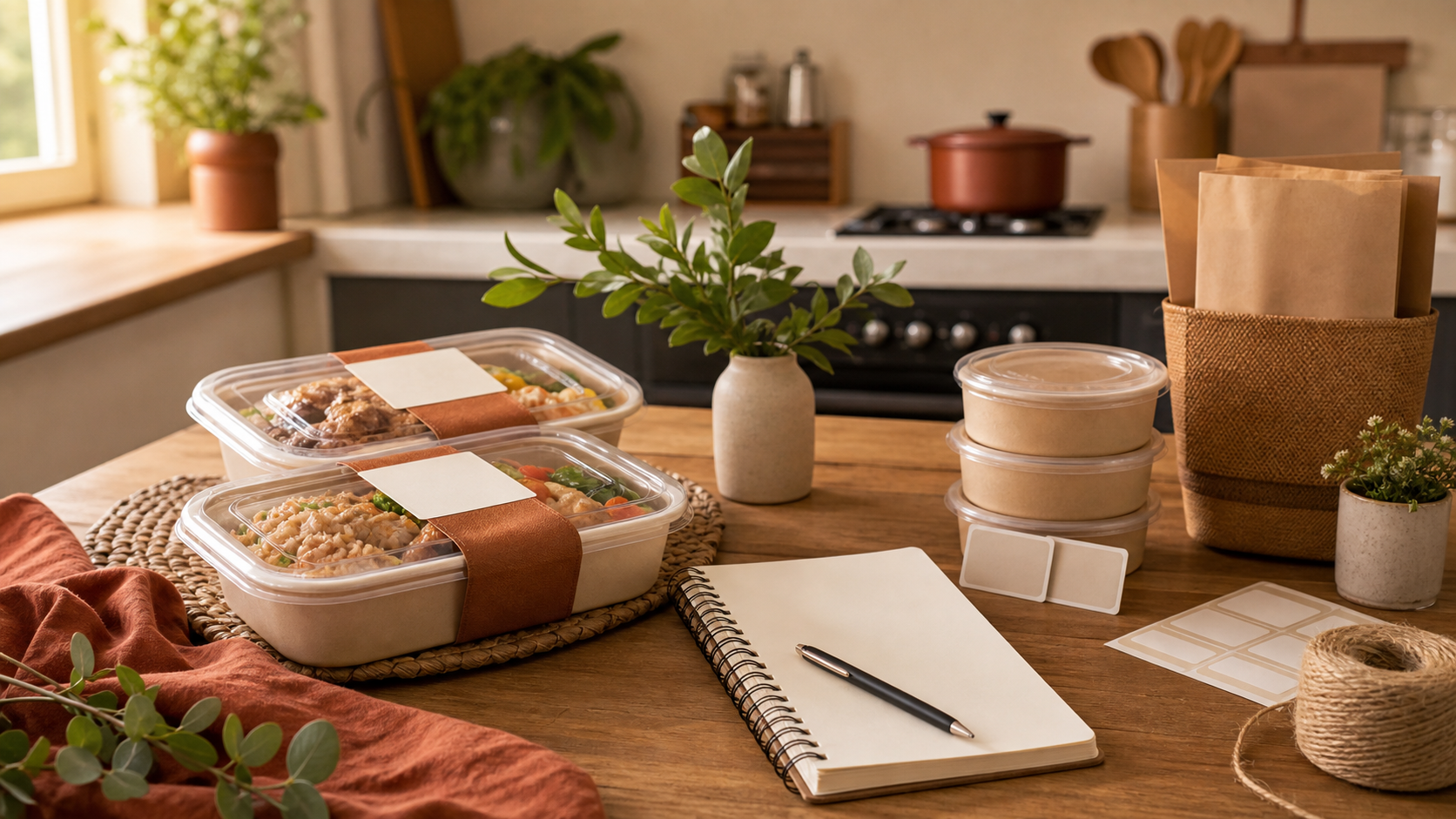
Starting a plate business becomes much easier when you stop trying to launch every idea at once. Your first goal is not a large menu, a perfect logo, or a week of sold-out drops. It is one legal, clearly priced sale that your kitchen can produce and your customers can understand.
This plan takes you from a dish people already ask for to a controlled first menu, paid preorder list, and sale-day review. It also keeps local rules at the beginning of the process, where they belong.
Verify what your kitchen is allowed to sell
Do not assume that calling something a cottage-food business makes every home-cooked meal legal to sell. Food-business requirements depend on the food, where it is prepared, how it is sold, and the state, county, or city responsible for oversight.
The FDA explains that more than 3,000 state, local, and tribal agencies regulate retail food and foodservice operations. Its state retail-food directory is a useful starting point, but your local health or agriculture department is the authority that can tell you which rules apply to your address and menu.
Before advertising a sale, ask the responsible agency:
- May this specific meal be prepared in a home kitchen?
- Does it require a permit, inspection, food-manager credential, or commercial kitchen?
- Are pickup, delivery, catering, or online payments treated differently?
- What labels, allergen information, records, taxes, or zoning rules apply?
The FDA Food Code is a model used by jurisdictions, not a single nationwide home-food license. States adopt and modify different versions, which is why the answer must come from the current rule where you operate. The SBA licensing guidance likewise notes that permits and zoning can vary by activity and location.
Save the agency name, webpage, contact person, date, and answer you receive. If your preferred hot meal is not permitted from home, ask what legal route would work: a permitted shared kitchen, a different product type, or another approved setup.
Choose one menu your kitchen can repeat
A first menu should prove that you can make, portion, package, and hand off a consistent product. One to three mains plus tightly controlled sides is usually easier to test than a restaurant-sized menu.
Start with dishes that:
- people already request from you;
- use equipment you know well;
- share ingredients without making every plate identical;
- hold their quality during the planned pickup or delivery window;
- can be portioned consistently;
- fit the rules you verified.
Write the plate exactly as a customer will receive it: main, sides, sauces, bread, garnish, utensils, and packaging. Choices create extra purchasing, labeling, and packing work, so offer only the options you can track cleanly.
Run a small kitchen test before posting. Cook the recipe, measure its finished yield, fill the actual container, close it, and leave it packed for the expected travel time. The new-menu testing guide gives you a structured way to evaluate yield, portion, workflow, packaging, and customer feedback.
Calculate the price before announcing the menu
Do not start with what feels affordable and hope the numbers work later. A plate has to cover ingredients, packaging, paid help or owner labor, selling fees, allocated overhead, and profit.
Use a tested recipe and record the amount of every ingredient consumed by the batch. Add containers, lids, cups, labels, bags, napkins, utensils, and condiments. Estimate the time spent shopping, preparing, cooking, packing, messaging customers, and completing handoffs.
Then calculate:
- Total variable cost for the sale.
- Saleable plates produced by the tested batch.
- Variable cost per plate.
- A reasonable share of monthly fixed costs.
- Profit needed per plate to make the work worthwhile.
Use the full worked method in how to price food plates for profit. Your price must work for your costs and capacity; copying another seller’s number does not tell you whether your own sale is sustainable.
Set the sale rules before taking orders
Customers should be able to understand the complete offer without a private conversation. Prepare one menu post or order page that states:
- what is included;
- the price and available quantity;
- the order cutoff;
- accepted payment methods;
- whether an order is reserved before payment;
- pickup location or delivery area;
- available handoff windows;
- cancellation, late-pickup, refund, and substitution policies;
- the best way to report an allergy question before ordering.
Decide the maximum number of orders from tested kitchen capacity, not optimism. Consider refrigerator space, burner and oven time, cooling or holding needs, packaging space, vehicle capacity, and how many handoffs can happen at once.
A clear cap lets you close orders while the sale is still controllable. It is better to complete 15 accurate orders than accept 30 and discover on sale day that the oven, refrigerator, or pickup schedule cannot support them.
Use one preorder record and one source of truth
Orders scattered across comments, direct messages, texts, and payment notifications are easy to miss. Choose one intake route and move every confirmed order into the same record.
At minimum, track:
- order number;
- customer name and contact method;
- exact items and quantities;
- total charged and payment status;
- pickup or delivery selection;
- promised time window;
- any approved notes or substitutions;
- completion and handoff status.
The record can be a form feeding a spreadsheet, a simple ordering tool, or a carefully maintained sheet. The tool matters less than consistent fields and one owner. Follow the fuller workflow in the weekly preorder system.
Close orders at the advertised cutoff. Reconcile the order list against payments, resolve unclear records, and send each customer a short confirmation containing the item, total, handoff plan, and contact method.
Work backward from the first pickup
Once orders close, turn the final quantities into a production plan. Start at the first promised pickup and schedule backward through packing, cooking, preparation, thawing, shopping, and any allowed advance work.
List the equipment required by each task. Two dishes that both need the oven at the same time are not separate tasks; they are a capacity conflict. The same applies to refrigerator shelves, counter space, burners, mixers, and the person responsible for packing.
Use the plate-sale production schedule to map those dependencies. Stage labels, containers, sauces, bags, and the final order list before the kitchen reaches its busiest period.
Keep raw preparation, ready-to-eat work, packaging, customer messages, and handoffs separated as much as your setup allows. Follow the food-safety controls required by your jurisdiction and menu rather than inventing a single rule for every dish.
Run a smaller first sale on purpose
Your first sale is a controlled test of the whole system. Set a number of orders you can complete without borrowing untested equipment or depending on perfect timing.
During the sale, record actual information instead of relying on memory:
- when each major task started and finished;
- actual batch yield;
- missing or excess ingredients;
- packaging failures;
- customer wait times;
- refunds, substitutions, or missing items;
- food left over and why;
- questions customers asked before ordering.
Do not add last-minute menu items because someone asks in a comment. A clean “not this week” protects the orders already paid for.
Close the sale before planning the next one
After the last handoff, reconcile revenue, refunds, payment fees, food costs, packaging, labor time, and waste. Then review what limited the sale: demand, kitchen capacity, unclear ordering, price, packaging, or handoff timing.
Choose one improvement for the next menu. You might tighten pickup slots, reduce a side choice, change a container, adjust the order cap, or reprice a plate using actual cost and yield data.
The first sale succeeds when it gives you a repeatable process and trustworthy numbers. Verify the rules, narrow the menu, price it honestly, capture every paid order in one place, and treat the day as a test you can improve—not a performance that has to look like a finished restaurant.
Ready to move?
Turn the research phase into your first sale.
The guide brings pricing, menu planning, marketing, and setup into one clear playbook.
Get the guide on Gumroad